“The bottom line in the Christian life is obedience and
most people don’t even like the word.”
– Charles Stanley (1932-2023)

The Lord says:
“These people come near to me with their mouth and honor me
with their lips, but their hearts are far from me.
Their worship of me is made up only of rules taught by men.

Therefore, once more I will astound these people with wonder
upon wonder; the wisdom of the wise will perish, the intelligence
of the intelligent will vanish.”

Woe to those who go to great depths to hide their plans from
the Lord, who do their work in darkness and think, “Who sees us?
Who will know? “

You turn things upside down, as if the potter were thought to be
like the clay!
Shall what is formed say to him who formed it, “He did not
make me”? Can the pot say of the potter, “He knows nothing”?
Isaiah 29:13-16

When on January 16,1956, the party of missionary volunteers, Quichua Indians,
Ecuadorian soldiers, and American airmen who had gone to search for the five
missing men returned to tell us that they were all dead, there was little sense
of drama for me. The history of missions had repeated itself. I could see that,
for I read stories of missionaries, from the Benedictine monks who crossed the
Alps into Germany and were murdered by savage tribesmen, to nineteenth-century
Englishmen who went to the South Sea Islands and were clubbed to death. The
crusading spirit, the thrill of reaching an unreached tribe, the passion for
souls which is supposed to motivate some -all these faded out completely. I
knew that if life was to go on, it must go on meaningfully. I was forced back
to the real reasons for missionary work – indeed, the real reason for living at
all. My husband Jim and the four men who had gone into Auca territory had one reason:
they believed it was what God wanted them to do. They took quite literally the words
“The world passeth away and the lust thereof, but he that doeth the will of God
abideth forever.” It is only in obeying God that we may know Him. Obedience, if it
is a good reason for dying, is just as good a reason for living. I knew that there was
no other answer for me. The “whys” that screamed themselves at me day and night could
not be silenced, but I could live with them if I simply went on and did the next thing.
p.13 & 14
Note:(Below is an explanation of Elisabeth Elliot’s struggle with God in prayer about
returning into the jungle to the savage Auca Indians with her 3 year old daughter
after the murder of the 5 missionaries including her husband Jim Elliot
and the subsequent decision to do so.)

It was clear to me that the central issue was not one of methods. Something could go
wrong with the very best plan. Some unexpected factor could throw off the wisest
calculations. I simply asked the Lord to do what He wanted to do about it. For once
in my life I had no suggestions to make to Him about how He was to do it. I placed
myself in His hands, saying that if He wanted to give me a part in reaching the Aucas,
I was ready. I had noticed throughout the Bible that, when God asked a man to do something,
methods, means, materials, and specific directions were always provided. The man had one
thing to do: obey. p.15
The few who knew of this contemplated step wrote to immediately warn
and question me. Some told me point-blank that I must be mistaken.
To disregard completely what one called the “most elementary rules of
prudence” would be folly. I certainly needed no stronger proof of the
nature of the people I proposed to visit than their treatment of my
husband. I knew that my position was quite indefensible. But I knew,
too, that it was the duty which lay before me. That duty I took to be
the will of God. I had heard no voices, seen no visions. But it seemed
to me that the Bible, which I regard as a book of principles by which
we are to live if we want to know what real freedom is, was daily presenting
to me fresh confirmation of the fact that I had not mistaken God’s design,
and so I went ahead. One morning my Bible reading fell at the story of Queen
Esther. Esther was well acquainted with the law which required that anyone
entering the king’s presence without being called should be killed. She knew,
also, that it was her duty to go in to entreat the king’s favor on behalf of
her people. This illustrated again the principle: if a duty is clear, the
dangers surrounding it are irrelevant. p.42,45
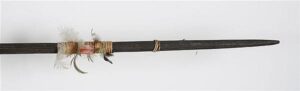
The Savage My Kinsman Published by Regal Books 1961,1989
Elisabeth Elliot (1926-2015)

Who among you fears the Lord and obeys the word
of his servant?

Let him who walks in the dark, who has no light,
trust in the name of the Lord and rely on his God.

But now, all you who light fires and provide
yourselves with flaming torches, go, walk in the
light of your fires and of the torches you have
set ablaze.
This is what you shall receive from my hand:
You will lie down in torment.
Isaiah 50: 10,11

Now Elijah the Tishbite, from Tisbe in Gilead,
said to Ahab, “As the Lord, the God of Israel, lives,
whom I serve, there will be neither dew nor rain
in the next few years except at my word.”

Then the word of the Lord
came to Elijah: “Leave here, turn eastward and hide
in the ravine of Kerith, east of the Jordan.

You will
drink from the brook, and I have ordered the ravens to
feed you there.”

So he did what the Lord had told him. He went to the
ravine of Kerith, east of the Jordan, and stayed there.

The ravens brought him bread and meat in the morning,
and bread and meet in the evening, and he drank from
the brook.
1 Kings 17:1-6