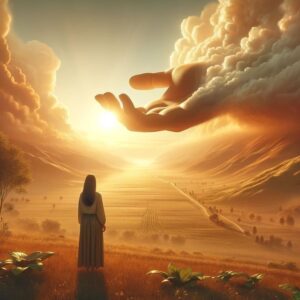

He who forms the mountains, creates the wind, and reveals
his thoughts to man, he who turns dawn to darkness, and
treads the high places of the earth—

the Lord God Almighty
is his name.
Amos 4:13
They who “lean to their own understanding”…
who care more to be learned than to be holy;
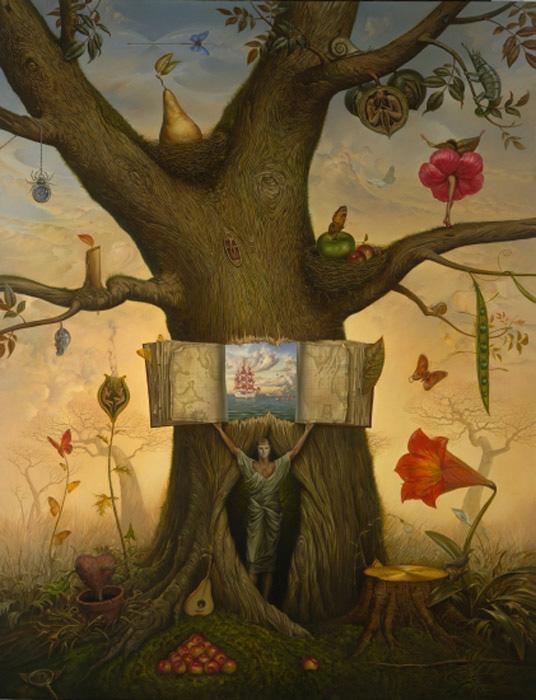
who value the tree of knowledge
more than the tree of life;
who desire “meat for their lust,” rather than manna for their souls.
Such, indeed, make difficulties for themselves. The “voice out of the whirlwind” rebukes them, as “darkening counsel by words without knowledge.” (Job 38:1,2.)
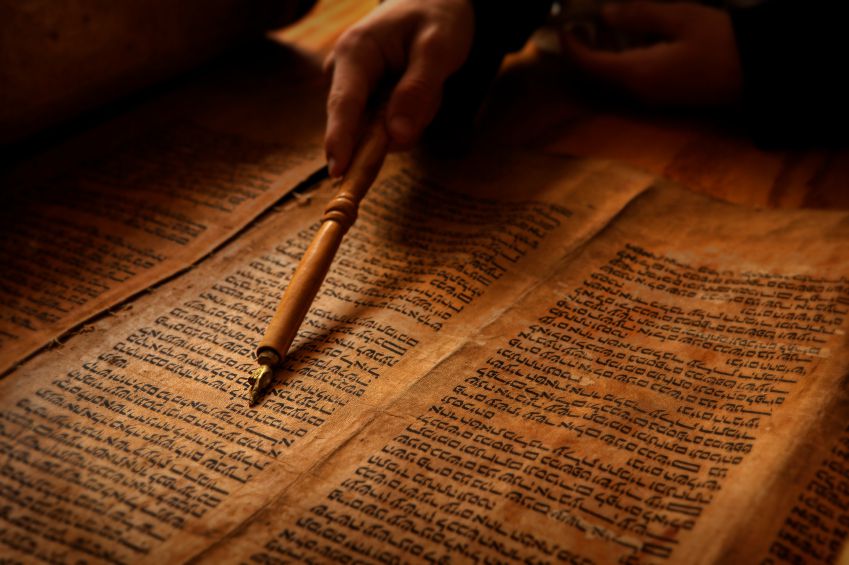
Scripture difficulties belong not to the Book itself, but to man’s blind and corrupt heart.The carnal man cannot understand it, any more than the blind can see the noon-day light of the sun.
But ‘it is easy to all that have a desire to it, and which are not blinded by the prince of this world.’ The “babes” are taught of God. (Matthew 11:25).
He not only unfolds the truth, but opens their hearts to receive it. There will be, indeed, great depths.
from Proverbs by Charles Bridges (1794 -1869) Excerpt from Proverbs Chapter 8 P.73,74
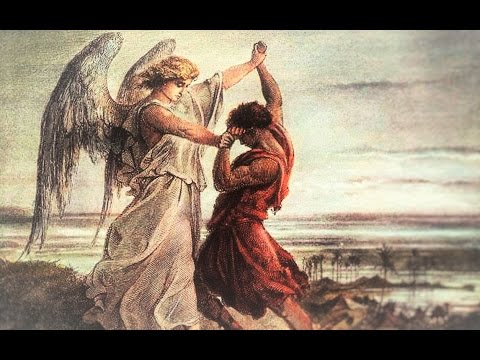
After a lifetime of wrestling with the divine, the hero of the story comes to the following conclusion:
“I know now, Lord, why you utter no answer.
Before your face questions die away. What other answer would suffice?”
A Quote from C.S Lewis’s Novel Till We Have Faces
C.S. Lewis (1898-1963)
This idea comes from The Whole Church: Guide (May 2019 Issue)
by Dr. Charles Stanley
“Take time. Give God time to reveal Himself to you. Give yourself time to be silent and quiet before Him, waiting to receive, through the Spirit, the assurance of His presence with you, His power working in you.
Take time to read His Word as in His presence, that from it you may know what He asks of you and what He promises you.
Let the Word create around you, create within you a holy atmosphere, a holy heavenly light, in which your soul will be refreshed and strengthened for the work of daily life.
From The Secret of Adoration – Andrew Murray (1828-1917)


The Greek for ‘word’ is Logos, a term that was used by stoic philosophers for the rational principle behind the universe and subsequently invested with additional meaning by Christians, who used it to describe the second person of the Trinity. The term ‘word’ itself conveys to us notions of command, meaning, code, communication – thus information; as well as the creative power needed to realize what was specified by that information. The Word, therefore, is more fundamental than mass-energy. Mass-energy belongs to the category of the created. The Word does not.


John C. Lennox


![]()
![]()